
While you've been wondering if QuickBooks Desktop is long for this world, Intuit has been slowly enhancing the inventory capabilities of QuickBooks Online. Many recent enhancements are significantly improving the 'inventory' functionality of QBO.
If you use QuickBooks Online Plus, QuickBooks Online Advanced, or Intuit Enterprise Suite you may not even be aware that behind the scenes Intuit has been significantly improving your inventory capabilities. Furthermore, if you are using QuickBooks Online Simple Start or QBO Essentials, you can add-on the inventory functionalities of the the 'top of the line' QBO squad with an Intuit Inventory module*,
We told you about six months ago that QBO Advanced and Intuit Enterprise Suite users were going to have an alternative 'inventory valuation method', Moving Average Cost (MAC) also known as 'weighted average cost.' This inventory cost method is what most QuickBooks Desktop users have been using for years; although, some QuickBooks Desktop Enterprise Advanced Inventory feature users chose FIFO as their inventory cost method.
Well, over the last six months, Intuit has made two inventory valuation methods available to users pf other QBO SKUs when they add-on the supplemental Inventory module. for cost accounting: First In, First Out (FIFO), which has been the traditional QBO method was always the 'base inventory costing method' of QBO.
Both 'cost methods' have their benefits and help with inventory costing in their own way. Users should review the two methods and determine which works best for them and their company. Costing methods must be understood and used correctly to ensure you report your costs accurately and manage your inventory effectively. Users must choose their method carefully because it can't be changed later.
Because of the tax implications, it's always wise to consult with an accountant or financial advisor.
When you sell products, you must account for the cost of your inventory to determine profit. One method for assigning a cost to what you sell (Cost of Goods Sold or COGS) and the inventory you still have on hand is the Moving Average Cost (MAC) method. When a business sells non-perishable products, or inventory with a stable turnover, MAC accounting helps smooth out price fluctuations. MAC accounting can also provide a more realistic reflection of current inventory values and market conditions, promoting more accurate financial reporting and improved decision-making.
Intuit's Online products computer MAC each time a user buys something for inventory. The formula is simple; the new Moving Average Cost = (Total Cost of Goods Available Before Purchase + Cost of New Purchase) / (Total Units Available Before Purchase + Units in New Purchase).
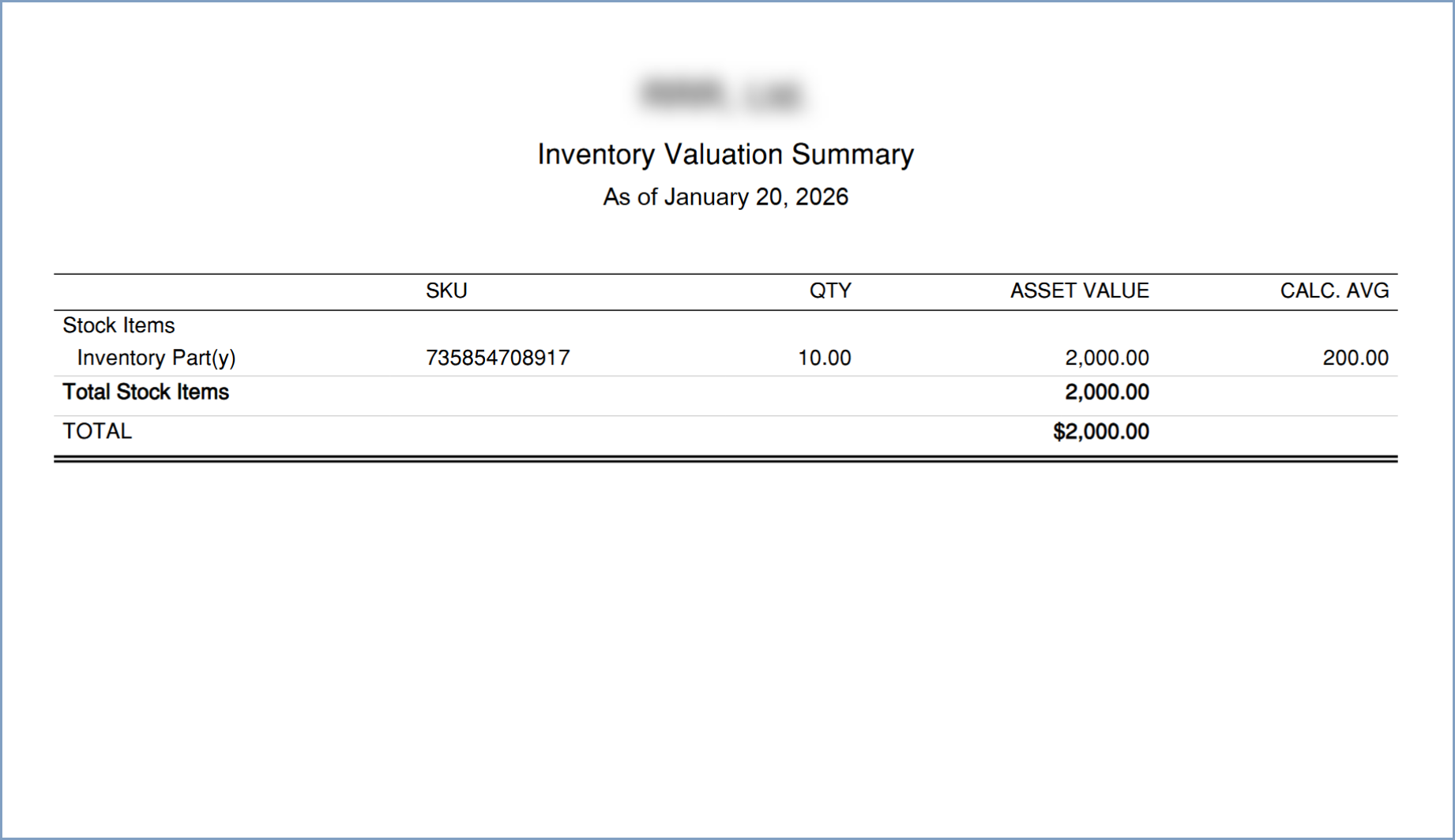
As a result, MAC represents the average cost for all units of an item in inventory at a specific point in time based on the cumulative value of each purchase and sale. So, the average updates after every purchase. And, when units are sold, they are valued at the most recently calculated average cost.
MAC doesn't track costs based on when the item arrived, like FIFO or LIFO. Instead, it uses the exact average cost for every unit you have for sale. This balances out the effect of price changes since it doesn't favor the price of the first or last items you bought.
Because of this 'averaging of cost', MAC represents a better choice for businesses that:
- Sell inventory that experiences fluctuating purchase prices, MAC can provide sellers with more stabilized Costs-of-goods Sold and Inventory asset valuations. Contrary to FIFO and LIFO that can result in significant valuation and COGS swings, MAC avoids the ups and downs of a fluctuating market.
- When inventory is best valued on the basis of the total number or quantity of each item on hand at any one time as representative of the value over 'the long haul', MAC is typically suitable over valuing your inventory on the basis of 'when it arrived' in your stock and how long it has been there. Of course, if stock items can expire, then inventory methods like FIFO and LIFO make more sense than MAC.
- Sell inventory that is homogeneous. If your inventory items are mostly undifferentiated from each other, like mass quanties of feed, raw materials, liquids or even non-expiring consumables, with only limited unique qualities from one another, MAC is a good choice.
- If you experience cyclic changes in inventory cost that are fairly common and predictable, then MAC tends to work to your advantage because of the 'average' value it represents over the course of time regardless of cyclic influences.
If you have been holding off transitioning from QuickBooks Desktop to QuickBooks Online because you thought it didn't have a way to value your inventory, or you didn't want to go through the hassle of having to file a 'change in inventory valuation' method with the Internal Revenue Service (as required) from the transition of your Average Cost under Desktop to FIFO under QBO, your days of excuse are over.
QBO, any SKU, as well as the most advanced cloud based Intuit product, Intuit Enterprise Suite, can now offer you inventory functionality based on weighted average cost (aka: moving average cost) just like you are use to in QuickBooks Desktop Pro, Premier or Enterprise.
On the other hand, if your excuse has been, "QBO doesn't have Sales Orders," well wait till my Part 2 of this mini-series when I tell you all about QBO Sales Orders and the recent enhancements Intuit has made to them.
Disclosures:
*-the present retail cost of the Inventory Add-on is $40.00 per month, price subject to change including discounting when available, or pricing increases. Price changes subject to notifications from Intuit.
Content based on or adapted from Intuit media source materials, including, but not limited to the various QuickBooks and IES product websites and details including supporting help documentation. Graphics taken from actual QuickBooks Online 'live' files. Intuit content adapted by Insightful Accountant from Intuit sources is furnished for educational purposes only.
As used herein, QuickBooks® , including the various QuickBooks Online SKUs and Intuit Enterprise Suite (IES) refer to one or more registered trademarks of Intuit® Inc., a publicly-traded corporation headquartered in Mountain View, California.
Any other trade names or references used herein may refer to registered, trademarked, or copyrighted materials held by their respective owners; they are included in the content for informational and educational purposes only.
This is an editorial feature, not sponsored content. No vendor associated with this article has paid Insightful Accountant or the author any form of remuneration to be included within this feature. The article is provided solely for informational and educational purposes.
Note: Registered Trademark ® and other registration symbols (such as those used for copyrighted materials) have been eliminated from the articles within this publication for brevity due to the frequency or abundance with which they would otherwise appear or be repeated. Every attempt is made to credit such trademarks or copyrights within our respective article footnotes and disclosures.